

Buddhist practice : ค้นหาหนังสือธรรมะ หน้า 4 / 21
หน้าหนังสือทั้งหมด
28
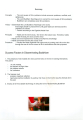
Understanding the Root Causes of Life's Problems through Buddhism
Summary
Concepts - The root causes of life's problems include economic problems, conflicts, and defilements
- The Lord Buddha's Teachings aim to correct the root causes of life's problems
- Buddhism c
This text discusses the root causes of life's problems, including economic issues, conflicts, and mental defilements, proposing that the Teachings of the Lord Buddha offer comprehensive solutions. By
183
Awakening Through Practice: The Path to Sainthood
The Perfections which he had built up for himself from the past, together with the good deeds of his present lifetime added up to a level of Perfections superior to those of his contemporary monks. Co
In the narrative of Koṇḍañña's journey, we see how individual Perfections and good deeds lead to his early awakening, inspiring both him and his companions to deeper faith and dedication in their prac
24
The Path of Self-Mortification in Buddhism
2. The Path of Self-Mortification
According to the Buddha, the practice of self-mortification [attakilamathānuyoga] is fruitless. He said that it is not a practice in keeping with the tenets of Buddhi
In Buddhism, the practice of self-mortification is deemed fruitless by the Buddha. He elucidates that these practices, such as lying on thorns and severe fasting, do not genuinely rid individuals of d
178
Practicing Austerity in Buddhism
"In order to differentiate between need and want, our
ancestors trained themselves by practicing austerity on every
Buddhist Holy Day. Many teaching monks say that if a person
wants to experience such
การฝึกอัสเตรีตี้ช่วยให้เราแยกแยะความต้องการและสิ่งที่ต้องการได้ชัดเจน โดยเริ่มจากการใช้ชีวิตในวัดและสวมเสื้อผ้าขาวเพื่อความมีสติและระมัดระวัง การปฏิบัติดังกล่าวนำมาซึ่งความสงบทั้งทางกายและจิตใจ และเมื
82
Types of Meditation
78 MEDITATION
TYPES OF MEDITATION
Buddhist texts, such as the Visuddhimagga¹, describe forty different methods of practice. All of them have the same goal: to train the mind to be still and to attain
Buddhist texts, like the Visuddhimagga, outline 40 meditation methods with the same goal of mastering the mind to achieve Buddhahood. Meditation can be categorized into three types: positioning the mi
185
The Survival of Dhammakaya Temple Amidst Abandonment
…makaya Meditation, he rediscovered the technique of meditation which was the
original mainstream of Buddhist Practice, knowledge which had disappeared five-hundred years after
the Lord Buddha passed to Nibbana.
The Wa…
This text reflects on the future of Buddhism in Thailand, especially regarding the increasing number of abandoned temples. It emphasizes the importance of the Dhammakaya Temple and its ability to with
181
Understanding External and Internal Fools in Buddhism
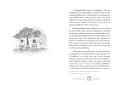
1) External Fools include non-Buddhists. They are determined to demolish Buddhism, whether they are of other religious affiliations or not. They typically try to cast aspersions upon Buddhist monks. W
In Buddhism, External Fools are non-Buddhists who seek to distort and undermine Buddhist teachings, casting aspersions on monks and creating confusion. Internal Fools, on the other hand, are Buddhists

1
Tomorrow The World Will Change
Luang Phaw Dhammajayo was born in Singburi Province, Thailand in 1944. Backed with deep interests in Buddhism and meditation, he was ordained as a Buddhist monk at the age of 25 at Wat Paknam Bhasicha
Luang Phaw Dhammajayo, a prominent Buddhist monk from Thailand, advocates for world peace through inner peace and meditation. He emphasizes that true happiness is attainable and essential for achievin
182
Characteristics of a True Buddhist
are like any of them and if we have performed our duties as true Buddhists yet or not.
A true Buddhist must exhibit the following characteristics:
1) Belief in the Lord Buddha’s Enlightenment. It is
This text outlines the defining characteristics of a true Buddhist, emphasizing belief in the Lord Buddha's Enlightenment, adherence to the 5 precepts, understanding the Law of Kamma, and maintaining
5
Understanding Kamma and Buddhist Practices
…mations’ (sankharas) are the program which we have—through ignorance—made in past lives. The aim of Buddhist practice is to get beyond all kamma.
กรรมกิเลส vice of conduct; action causing impurity
กรรมฐาน …
…ณา) and respect (กราบ) is highlighted as essential virtues in these practices. The ultimate goal of Buddhist practice is to transcend the effects of kamma, guiding practitioners towards enlightenment and a deeper unde…
16
Understanding the Dhammacakka Pavattana Sutta
emonies. This is especially true of the ceremonies held on Asālha Pūjā Day, when it is a traditional duty for Buddhist monks to celebrate the anniversary of the preaching of the Dhammacakka Pavattana
The Dhammacakka Pavattana Sutta holds significant importance in Buddhist ceremonies, especially during Asālha Pūjā Day when monks chant it for laypeople's benefit. Unfortunately, finding unabridged co
3
การจัดการองค์กรในวัดพระธรรมกายเพื่อสร้างสันติภาพ
**Abstract**
This research has 3 objectives which are 1) to study the current state of the organization management of Wat Phra Dhammakaya 2) to analyze the state of the internal organization manageme
การวิจัยนี้มี 3 วัตถุประสงค์ ได้แก่ ศึกษาสถานะปัจจุบันของการจัดการองค์กรของวัดพระธรรมกาย วิเคราะห์การจัดการองค์กรภายในตามหลักการของสันติภาพ และนำเสนอโมเดลการจัดการองค์กรในวัดพระพุทธศาสนาสำหรับสันติภาพ
3
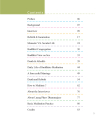
Exploring Buddhist Teachings and Practices
Contents
Preface
Background
Interview
06
07
09
Rebirth & Incarnation
17
Monastic V.S. Secular Life
24
Buddhist Congregation
30
Buddhist View on Sex
33
Death & Afterlife
39
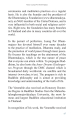
Daily Life of Buddhists Medi
This book delves into various aspects of Buddhism, including the concepts of rebirth and incarnation, the contrast between monastic and secular life, and the daily practices of Buddhists. It offers in
47
Luang Por Dhammajayo: A Journey of Peace and Meditation
About Luang Por Dhammajayo
ceremonies and meditation practices on a regular
basis. He is also the founder and the president of
the Dhammakaya Foundation (www.dhammakaya.
net), an NGO member of the Uni
Luang Por Dhammajayo is the founder of the Dhammakaya Foundation, an influential leader in social and religious activities. The foundation operates globally and promotes meditation and the true nature
138
Exploring Chinese Philosophical Texts and Their Influence
Kohn, Livia, and Yoshinobu Sakade. Taoist Meditation and Longevity Techniques. Center for Chinese Studies, University of Michigan, 1989.
Mair, Victor H. “What Is Geyi, After All?” In Philosophy and Re
This collection examines various texts that shed light on the development of Chinese philosophical thought and literary traditions. Works range from Livia Kohn's exploration of Taoist meditation pract
567
The Heart of Dhammakaya Meditation
Oslo: Hermes Pub.
Jayamanggalo, Phra Maha Sermchai. 1997. The Heart of Dhammakaya Meditation. 2nd ed. Bangkok: Dhammakaya Buddhist Meditation Foundation.
Jherora. 2013. ทางสายกลาง (ตอนที่ 2) [cited 15
The text discusses the essence of Dhammakaya meditation, emphasizing its relevance in achieving mindfulness and spiritual growth. The content encompasses various scholarly works and references related
154
Buddhist Texts and Translation Studies
Chen Hui Zhuan 陳慧攢, and The SAT Daizōkyō Text Database. “Yin Chi Ru Jing Zhu 陰持入經註 T1694.” Tripitaka. Tokyo, November 28, 2011. The SAT Daizōkyō Text Database.
Deleanu, Florin. 1997. “A Preliminary S
This compilation includes various studies and translations relevant to Buddhist texts, focusing on significant works such as 'Yin Chi Ru Jing Zhu' and 'Wu Men Chan Jing Yao Yongfa'. Scholars like Chen
72
Understanding Vinaya: The Code of Conduct in Buddhism
'Vinaya' means 'code of conduct', 'discipline' and 'regulations'on the behaviour of individuals. As a collection, it is the name of the first portion of the Buddhist Canon [Vinaya-piṭaka] which deals
Vinaya refers to the code of conduct governing the behavior of individuals within the Buddhist community, particularly monks and nuns. It encompasses the Vinaya-piṭaka, the first portion of the Buddhi
10
Delicate Love and Buddhist Values in Relationships
Delicate Love
Buddhist traditions serve as wonderful guidelines for
a couple's married life. If we are to study Buddhist
traditions, we will learn to distinguish which actions
are appropriate and inap
Delicate Love discusses the guidance provided by Buddhist traditions for couples in their married life, emphasizing ethical actions and the importance of The Five Precepts. It contrasts modern views o
94
Buddhist Manuscript Formats in Dai Region
Volume 98 Khuddaka-nikāya (小阿含经) and Volume 99 Majjhima-nikāya (中阿含经) are all in 5-line to 6-line format manuscripts; Volume 100 Digha-nikāya (长阿含经) is in 4-line to 5-line-format. The jäṭaka Wexiandal
Volume 98 Khuddaka-nikāya and Volume 99 Majjhima-nikāya are primarily in 5-6 line formats, while Volume 100 Digha-nikāya is formatted with 4-5 lines per page. The jäṭaka Wexiandala represents a key Bu